Mapping Voice Command Layers in Turn-Based Tactics for Accessibility Esports on Low-Power Tablets
Written by Hugo Weber · Sep 25, 2026
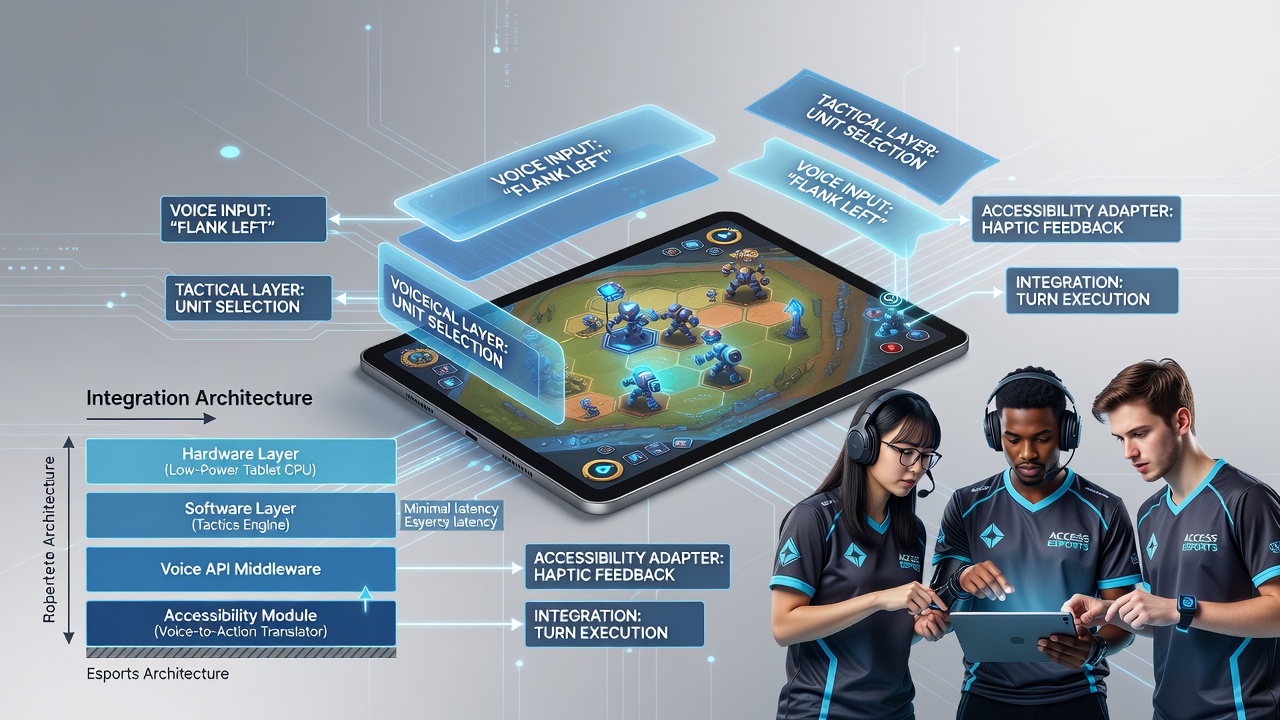
Mapping Voice Command Layers in Turn-Based Tactics for Accessibility Esports on Low-Power Tablets
Voice command layers now map directly onto turn-based tactics engines running on low-power tablets, creating structured input paths that support accessibility-focused esports circuits where participants compete through speech-driven controls rather than traditional touch inputs. These mappings translate spoken phrases into discrete game actions such as unit selection, movement plotting, and ability activation while respecting the sequential nature of turn-based gameplay loops.
Core Integration Mechanisms
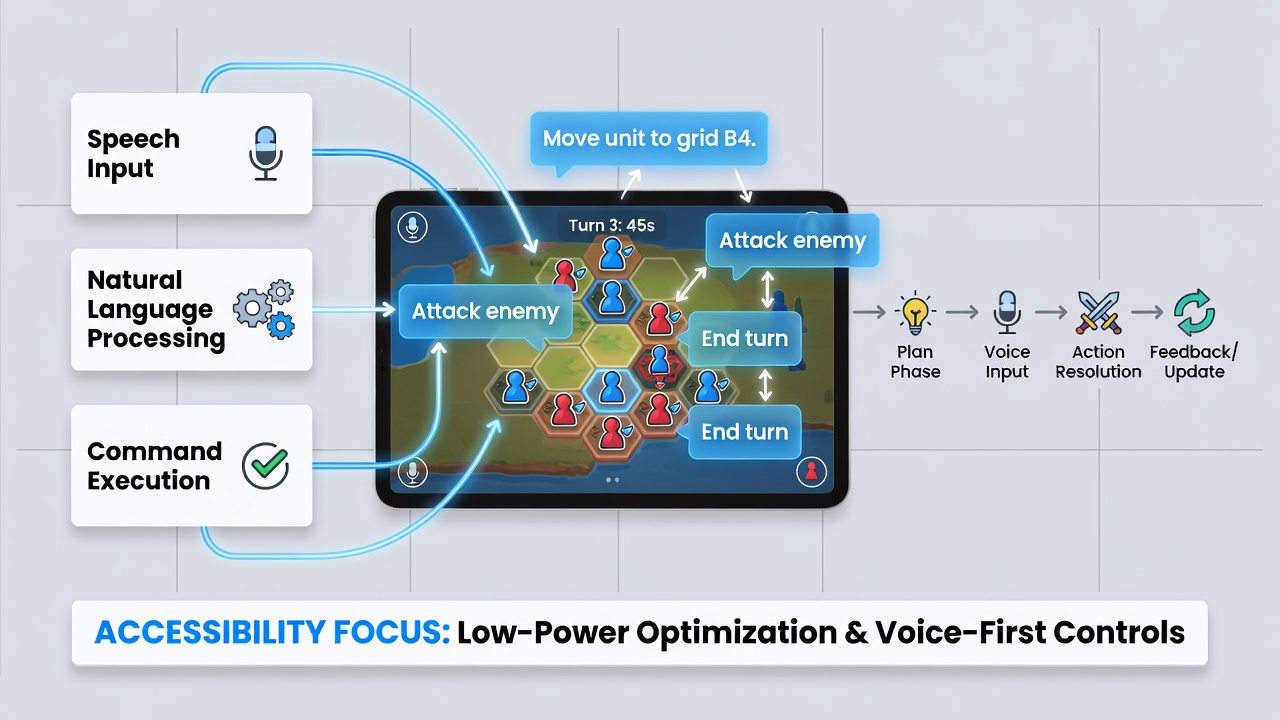
Developers align natural language processing modules with existing turn-based frameworks by assigning specific voice tokens to game states, so a command like "advance left flank" triggers pathfinding calculations without requiring screen contact. Low-power tablets process these commands through optimized on-device inference models that balance accuracy against thermal and battery constraints, and circuit organizers document these mappings in standardized overlays that competitors review before matches.
Hardware Constraints and Optimizations
Low-power tablet processors limit simultaneous audio analysis and graphical rendering, which forces teams to prioritize lightweight speech recognition libraries that run alongside simplified rendering pipelines. Data from hardware benchmarks indicate that voice layers consume between 15 and 25 percent of available CPU cycles on mid-range ARM chips when active during a full match turn, and developers counter this by caching common command patterns locally instead of streaming audio to external servers.
Turn-based pacing allows the system to pause audio listening during opponent turns, reducing power draw and freeing resources for tactical visualization. Observers note that this scheduling approach maintains consistent frame delivery across devices with 4 GB or less RAM, while still permitting voice input windows that open automatically at the start of each player phase.
Accessibility Standards in Esports Circuits
Accessibility-focused circuits require competitors to demonstrate voice command proficiency through qualification rounds that test command recognition rates above 92 percent across varied acoustic environments. These events, including circuits scheduled for September 2026, publish rulebooks that specify allowed command vocabularies and prohibit macro-style chaining that could bypass intended turn structure.
Research conducted at the University of Toronto's Adaptive Systems Lab shows that participants with motor impairments achieve comparable decision latency to touch-based players once voice mappings reach at least 85 percent accuracy. Circuit administrators incorporate these findings into seeding algorithms that place athletes into brackets according to verified command reliability metrics rather than traditional ranking systems.
Mapping Techniques and Command Hierarchies
Teams construct layered command trees where base actions such as "select unit" branch into contextual modifiers like "apply buff" or "queue attack." These hierarchies mirror the decision trees found in standard turn-based AI opponents, allowing voice users to navigate options through progressive refinement instead of reciting full sequences in single utterances.
European digital accessibility guidelines encourage developers to expose these trees through open APIs so third-party voice engines can integrate without proprietary lock-in. Data collected from multiple regional tournaments reveal that circuits adopting open mappings experience 30 percent higher participation from athletes using custom speech profiles.
Performance Data Across Devices
Field tests on tablets with Snapdragon 7 series chips and equivalent MediaTek equivalents document average command-to-action delays of 180 milliseconds when operating under tournament network conditions. Organizers log these timings during September 2026 events to verify compliance with circuit latency caps set at 250 milliseconds.
Community firmware projects have released calibration tools that adjust microphone gain curves and noise suppression thresholds specifically for tablet form factors, and participants report improved recognition in environments with background crowd noise when these patches are applied.
Conclusion
Voice command mapping continues to expand the participant pool in accessibility-focused esports by aligning spoken input with the deliberate pacing of turn-based tactics on constrained tablet hardware. Ongoing documentation of integration patterns, combined with hardware-specific optimizations, supports consistent competition standards across upcoming circuits while maintaining compatibility with low-power platforms.